






// What we do
Our Services
Mobile App development
Your mobile app deserves the A team — nothing less. Our Android and iOS app development experts have made apps for startups, big businesses, and everything in between.


Web App development
Snappy, tailor-made web applications require cutting-edge tech — which we revel in. That translates to a sleek and secure app built in a time frame to meet your needs.


Mobile Game development
We love seeing a game go from concept to reality. As consummate computer geeks ourselves, we fully understand what’s needed to make a fun, engaging game — and we have fun doing it, too.
Back-end development
While your customers or clients are busy being impressed by responsive user interfaces and clean front-end development, you can be confident knowing your app performs and scales how it needs to. Robust, well-conceived APIs mean your app can take all you throw at it — and then some.
Fintech
Building quality Fintech requires a unique skillset — one that’s difficult to find and even more challenging to scale. Luckily, you’re in just the right place. We’ve helped create some world-class Fintech apps. Our expertise covers the sector up and down, including Blockchain-based systems.

QA & Testing
We don’t wait for problems to sneak up on us — our search-and-destroy team of QA experts is on them before anything goes wrong. Our full-stack quality assurance and testing ensures clean features and an immaculate UI.
// Why Us
Why SmartDev?
You need excellent work. We provide it. It’s simple.
But of course, we owe you more of an explanation than just that.
First, we make sure to understand exactly what you need — and not just your work needs, but your company culture, values, and business goals. A holistic vision of your requirements helps us channel our expertise in the right direction. We’ll work with you through the full life cycle of a project, from concept to creation, using both cutting edge and traditional tools.
That expertise we mentioned is what fuels the engine of our company and delivers the goods. We merge the skills of European and Vietnamese software experts to build solutions that stand the test of time.
We attract and keep the best technical experts around to our development centre in Da Nang, Vietnam. Our job is to help you stay ahead of the curve and outpace the competition. Our goal is to challenge the status quo.
%
Active Clients
%
Projects Done
%
Developers
// What we serve
Business Industries

Fintech Software Development
Develop innovative solutions for your financial services, personalize your customer experiences, and revolutionize your fintech services. Keeping ahead of fintech trends gives companies not just a leg up on their competition but also boosted credibility.

Telecom Software Development
Diversify the availability of your telecom services, drive customer engagement, and reduce financial overhead. Telecommunications are the backbone of the world’s modern economy, and solid communications software keeps companies up to speed with current trends.
Healthcare Software Development
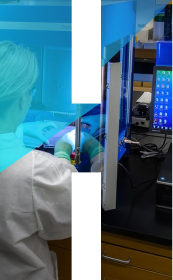
Create tech-driven healthcare solutions for more efficient patient care and enhanced overall satisfaction — for both patient and provider. Patients are more informed than ever, and expect healthcare providers to be on the cutting edge of technology.
E-learning Software Development
Keep ahead of the competition in the booming E-learning industry. We’ll help you offer seamless content distribution and integrate global educational expertise — so your end users get a program they understand and trust.
Travel and Hospitality Software Development
With so many options available, a travel and hospitality site has to be truly top-notch. You can win customers’ hearts by providing an outstanding UI and customer experience — which we just happen to be experts in.
eCommerce Software Development
If eCommerce was the future 20 years ago, it’s the standard model now — and customers expect nothing but the best. We provide the most innovative technological solutions to increase customer engagement and conversion rate, all while automating workflow to minimize your workload.
// Work with Us
Benefits


Access to Top Talent
Our developers live and breathe software — they’re true experts in their field. We know they’re the backbone of our company, so we treat them right to keep them happy. A happy developer is a good developer, able to focus 100% of their energy on your project.



Cost Efficiency
Naturally, you want the best value for your money. That means top-notch engineers and innovative solutions that don’t break the bank. That’s us — the perfect combination of price and quality. We shoulder the costs of our talent to minimize your outlays.



Value-driven Engineers
Our engineers are rockstars. They love what they do — creating software and solutions that meet your values and goals.

Simple Model
You can focus on the commercialization of your product. We’ll handle everything else. You’ve got plenty on your plate already, and our job is to make your life easier.
// What they say
Testimonials
Success stories originated in SmartDev.

KitchenPal
http://kitchenpalapp.com
“I am delighted to work with SmartDev’s team. They developed my mobile app and back-end from scratch in a timely and cost efficient manner. I definitely recommend SmartDev to any startup on the lookout for a reliable software company.”
Matthieu T.

IPTEQ
http://ipteq.com
“I greatly appreciate the service that SmartDev has been providing to IPTEQ over the last 3 years. The attention that the development team has been giving to our projects is remarkable.”
Santosh J.

SECOTI
https://www.secoti.com/
“The team at SmartDev have impressed us from day one. They have been delivering dependable, responsive, and cost-effective high quality code – every time.”
Paul M.